
Test Dealer Email Subject Lines Against Customer Questions
A useful subject-line test compares clear customer promises, not clever phrases detached from what the dealership can fulfill.
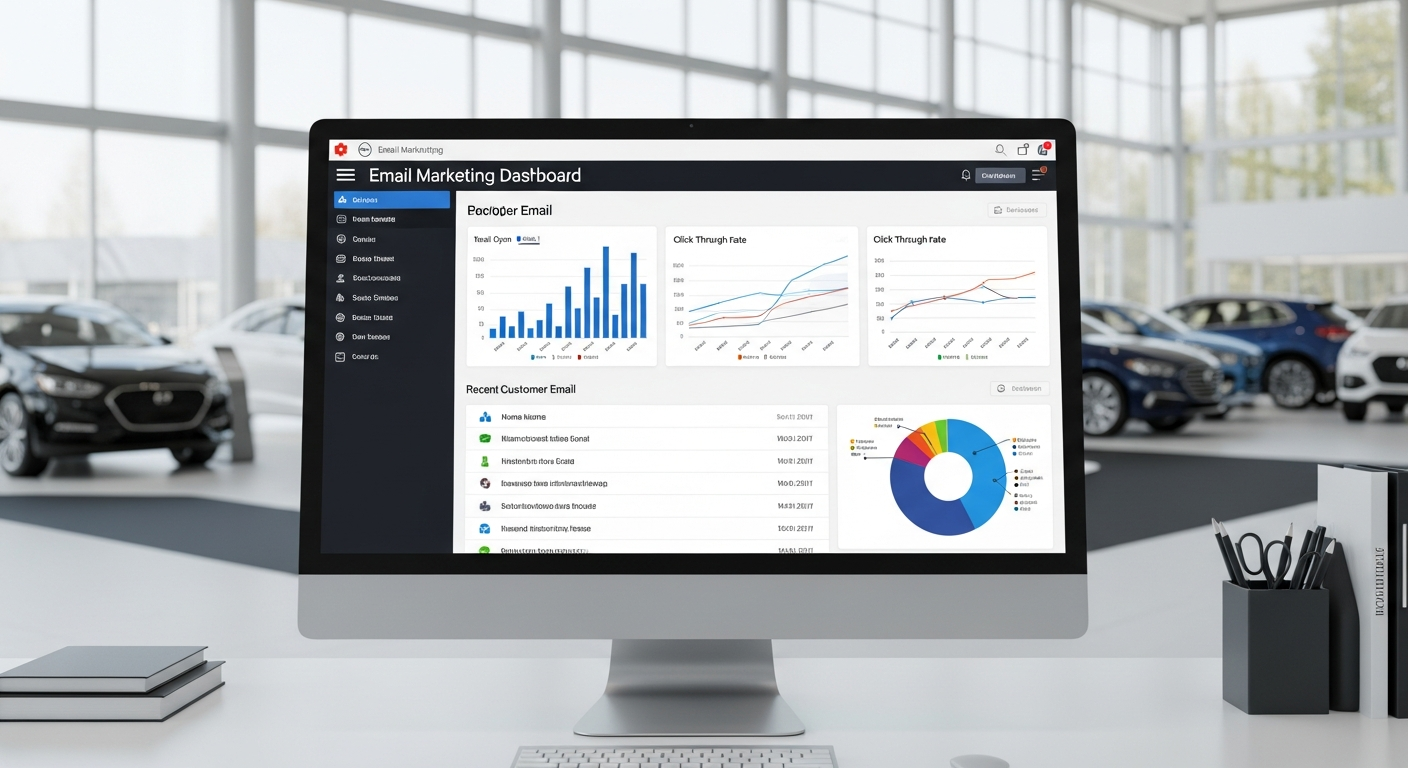
A Higher Open Rate Is Not Automatically a Better Subject Line
Subject lines compete for attention, but a dealership email still has to make a useful promise after the open. A vague tease may attract curiosity and produce clicks that do not match the inventory, offer, or service capacity. A specific line may earn fewer opens while creating more relevant conversations. Testing works when the team starts with a customer question, creates a small set of honest ways to answer it, and measures the action that follows rather than treating the first visible metric as the winner.
Start With One Audience and One Job
Do not compare subject lines across mixed audiences such as recent service visitors and cold vehicle shoppers. Define the recipient’s likely job: find an available vehicle, understand an ownership benefit, schedule a service visit, or review a store event. Then write variants that preserve the same offer and destination. One might name the vehicle, another might state the customer benefit, and a third might answer a timing question. The test should teach the team how customers respond to a clear framing, not which unrelated message produced a larger number.
- Keep the audience, offer, destination, sender, and send window stable while testing the subject.
- Change one meaningful element at a time: benefit, specificity, question, or urgency supported by facts.
- Write a matching preheader rather than using it to hide a different promise.
- Exclude internal addresses, recent complaints, and test records from the comparison.
- Choose a primary outcome and a small set of guardrails before launch.
Protect the Test From Operational Noise
Inventory can change, an offer can expire, or a service department can lose appointment capacity during a test. Record those conditions and pause the comparison if the customer promise changes. Keep the send timing and audience selection as even as the platform allows, and avoid declaring a winner from a tiny difference in a small list. Opens can be affected by client behavior and privacy controls, so read clicks, replies, appointment starts, valid inquiries, or other relevant actions alongside them. The test result is an observation with context, not a universal rule.
Write Subjects Customers Can Verify
Specificity is useful when it is supported. “Three available hybrid SUVs to compare” should lead to three real, relevant vehicles or an honest model page. “Your service question answered” should lead to information that answers it, not a generic sales page. Avoid false scarcity, unexplained “last chance” language, and personalization that suggests knowledge the store does not actually have. The subject and preheader should set the same expectation as the email body and destination.
Turn Findings Into a Copy Library
After the test window, save the audience, variants, dates, delivery, downstream outcomes, inventory or service context, and decision. If a benefit-led subject helped one service audience, document the conditions rather than copying it everywhere. Ask the BDC or service team whether the resulting conversations were clearer or more confused. Over time, the library becomes a record of customer language and operational fit. It prevents the team from rerunning the same test with a new label and no memory of what happened.
FAQ
How long should a subject-line test run?
Run long enough to cover the planned audience and a meaningful customer-response window, while respecting the campaign’s offer and timing. Stop for a factual or operational error, not merely because an early metric looks favorable.
Should opens be the primary success metric?
They can be a diagnostic measure, but the primary metric should match the email’s job. A service appointment or qualified vehicle conversation is more useful than an open that never leads to a relevant next step.
Subject-line testing is most valuable when it makes the customer’s question clearer. It helps the dealership improve messaging without turning the inbox into a contest for attention disconnected from the experience after the click.
Want to implement these strategies?
Relevant Dealer can run this exact playbook for your operation.
Talk to an Operator