
A Dealer Video Brief Should Name the Next Action, Not Just the Vehicle
A production brief is more useful when it describes the decision a shopper should make after watching, not merely the model being filmed.
Start With the Job of the Video
A request such as “make a video about the new SUV” is a subject, not a brief. It leaves the producer guessing about the audience, the moment in the buying process, the proof the store can provide, and the action that should follow. Before anyone writes a script, name the job: help a parent compare cargo access, show a service customer how to prepare for an appointment, or give a returning shopper a reason to schedule a drive. One video can support several channels, but it should have one primary job.
Use evidence that the dealership already owns. Search questions, sales-call notes, chat transcripts, service-advisor explanations, and questions heard on the lot reveal where people hesitate. Choose one question that can be answered honestly on camera. A feature list is easy to copy from a brochure; an explanation of how a second-row seat folds, where to leave a vehicle for service, or what a trade appraisal visit involves is more useful because it reduces a real uncertainty.
Turn the Brief Into a Scene Plan
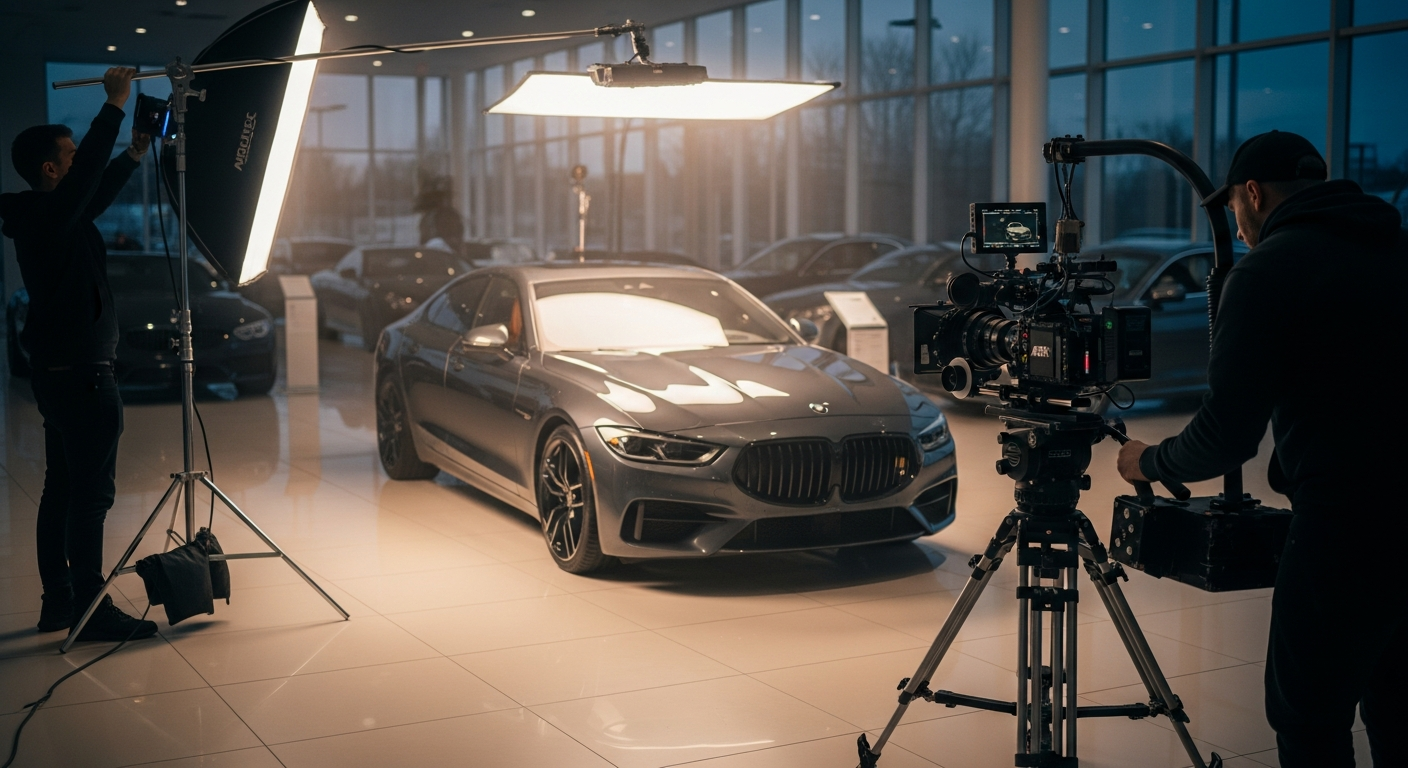
The brief should describe what a viewer must see, not just what a presenter must say. For a cargo video, list the camera position, the seat movement, the items that demonstrate the space, and the close-up that confirms the latch or power control. For a service-arrival video, list the driveway turn, the sign, the lane entrance, and the handoff point. If a fact cannot be demonstrated, identify the person or source who will verify it before filming. This keeps production from becoming a string of unsupported claims.
- Audience and buying moment: who is watching, and what decision is in front of them?
- Single promise: what useful question will the finished piece answer?
- Proof plan: which real vehicle, employee, process, or location will demonstrate the answer?
- Next action: view a matching inventory page, call the department, request an appointment, or ask a specific follow-up question.
- Accuracy owner: who approves prices, equipment, hours, and other changeable details?
Design for the Destination Before the Shoot
A video cannot repair a mismatched landing page. If the call to action is to compare trims, decide which page receives the viewer and make sure it contains the same model, availability context, and terminology. If the action is a service appointment, test the scheduler, its department selection, and its mobile form before the camera rolls. A short URL or button can be added during editing, but the destination needs an owner, a working path, and a measurement plan first.
Write a distribution note into the brief. The full piece may belong on a model page, a service hub, or a dealership video channel. A shorter cut might answer one question in a social feed, while a silent version needs readable on-screen context. Do not force every cut to carry every detail. Preserve the central answer, adapt the opening and closing for the placement, and keep the same factual review across versions.
Make Review Specific and Fast
Assign review by fact rather than sending a finished edit to a large group with no deadline. The product specialist verifies equipment, the fixed-ops manager verifies process, and the marketing owner verifies the destination and offer language. Ask reviewers to mark an exact timecode and proposed correction. A checklist that distinguishes factual accuracy, accessibility, brand fit, and technical delivery prevents subjective rewrites from turning a helpful explanation into a generic commercial.
Brief Checklist
- Name one customer question and one primary next action.
- List the scenes that prove the answer, including the vehicle or department needed.
- Mark every detail that can change and assign an approving owner.
- Test the destination, form, phone path, and tracking before publishing.
- Plan full, short, captioned, and silent-friendly versions without changing the claim.
- Record what the next production team should learn from questions and feedback.
FAQ
Does every dealer video need a presenter?
No. A technician, advisor, product specialist, or carefully framed demonstration may communicate the answer more credibly. Choose the format that makes the proof clear.
Should a brief include a sales target?
It should name the intended action and how the team will review it, but avoid promising that a single video will produce a predetermined number of leads or sales.
Want to implement these strategies?
Relevant Dealer can run this exact playbook for your operation.
Talk to an Operator