
The Dealer Video Host Prep System That Makes Shoot Days Calmer
A good host does not need to memorize a brochure. They need a clear point, verified facts, and a shoot process that leaves room for a natural explanation.
Choose the Person Who Can Explain the Moment
Dealership videos often default to the most comfortable person in front of a camera, even when someone else knows the customer question better. A product specialist may be right for a feature demonstration; a service advisor may be better for appointment preparation; a delivery coordinator may explain the handoff. The host does not need to be a polished announcer. They need permission to speak plainly, correct a detail, and say when an answer depends on the vehicle or department.
Give the host a one-page preparation sheet several days before filming. Include the audience, the one question being answered, three verified points, terms to avoid, the intended length, and the destination. Link each factual point to an internal source or name the manager who will verify it. This keeps rehearsal focused on meaning rather than forcing an employee to memorize copy that may sound unlike them.
Rehearse the Shape, Not Every Syllable
A useful outline has an opening situation, an explanation, a demonstration, and a next step. For a service host, that might be “arriving for a scheduled visit,” “what to bring,” “where the lane leads,” and “how to confirm the appointment.” For a product host, it might be a shopper need, a control or feature, a close-up, and a relevant page. Ask the host to explain the shape in their own words. If every sentence is locked, the result may be accurate but difficult to deliver and hard to update.
- Mark the non-negotiable facts in a different color from optional phrasing.
- List pronunciation, model-name, and department terms that need a quick check.
- Decide which details belong on screen rather than in spoken copy.
- Identify claims that require a current offer, VIN, policy, or manager confirmation.
- Agree on a respectful signal for pausing and restarting without embarrassment.
Make the Set Work for the Host
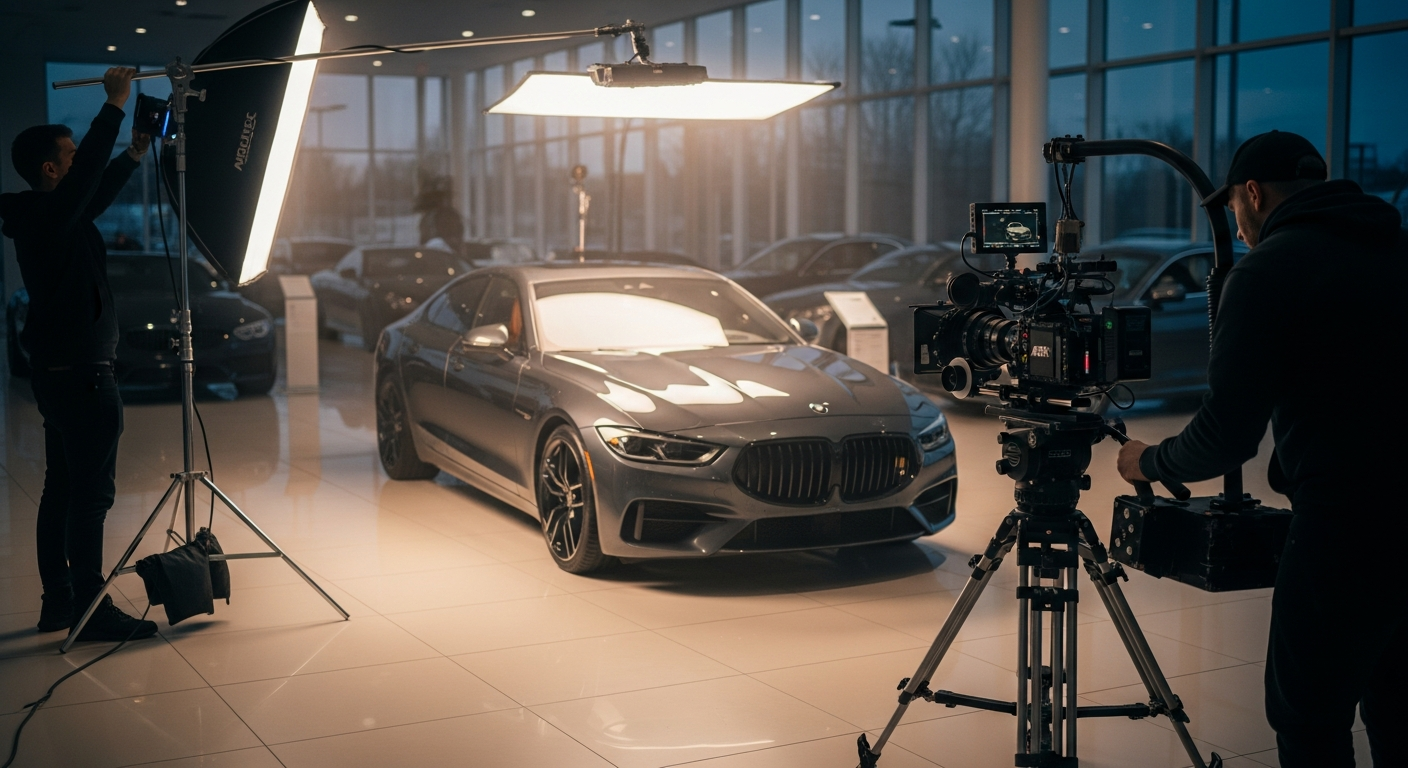
A quiet corner, a clean vehicle, and a simple mark for where to stand can improve a recording more than an elaborate backdrop. Check reflections, background conversations, HVAC noise, and the position of the vehicle controls before the host arrives. Keep water available, schedule breaks, and avoid filming a long run immediately after a customer-facing shift. If the host demonstrates a feature, let them perform it once without a camera so they can find the natural order.
Capture short segments instead of demanding one perfect take. Record the opening separately from the demonstration and closing, then capture a clean version of any critical fact. This gives the editor options while preserving the host's energy. Ask for a pause before and after each take, and keep the camera rolling long enough to capture a relaxed explanation. The goal is not to manufacture a mistake-free personality; it is to produce a clear, credible answer.
Review the Human and the Claim
After filming, review the cut with two questions in order. First, can a shopper follow the explanation without industry knowledge? Second, is every claim still true for the vehicle, department, and date of publication? A host may naturally say “we always” when the store actually handles a process conditionally. Replace the overstatement with a specific, accurate explanation. Ask the host to review pronunciation and tone, but route price, availability, policy, and technical corrections to the appropriate owner.
Host Prep Checklist
- Select a host for subject knowledge and willingness, not celebrity.
- Send an audience, question, outline, fact sheet, destination, and timing.
- Rehearse transitions and demonstrations without demanding a memorized script.
- Test sound, reflections, background activity, and the vehicle or service setup.
- Capture short takes, clean facts, natural pauses, and alternate closings.
- Give the host a clear review window and remove claims that cannot be verified.
FAQ
What if an employee refuses to appear on camera?
Respect the decision. Use a different host, voice-over, hands-only demonstration, or text-led explanation; a reluctant presenter usually creates a weaker and less sustainable series.
Should hosts read a teleprompter?
A teleprompter can help with required wording, but a short outline and conversational rehearsal often suit educational dealer videos better. Test both approaches with the specific host.
Want to implement these strategies?
Relevant Dealer can run this exact playbook for your operation.
Talk to an Operator