
Build a Drone B-Roll Library That Serves Every Rooftop, Not One Hero Reel
A drone shoot earns its keep when the footage is planned as a reusable library, not when it produces one cinematic homepage edit.
Plan for Retrieval Before You Fly
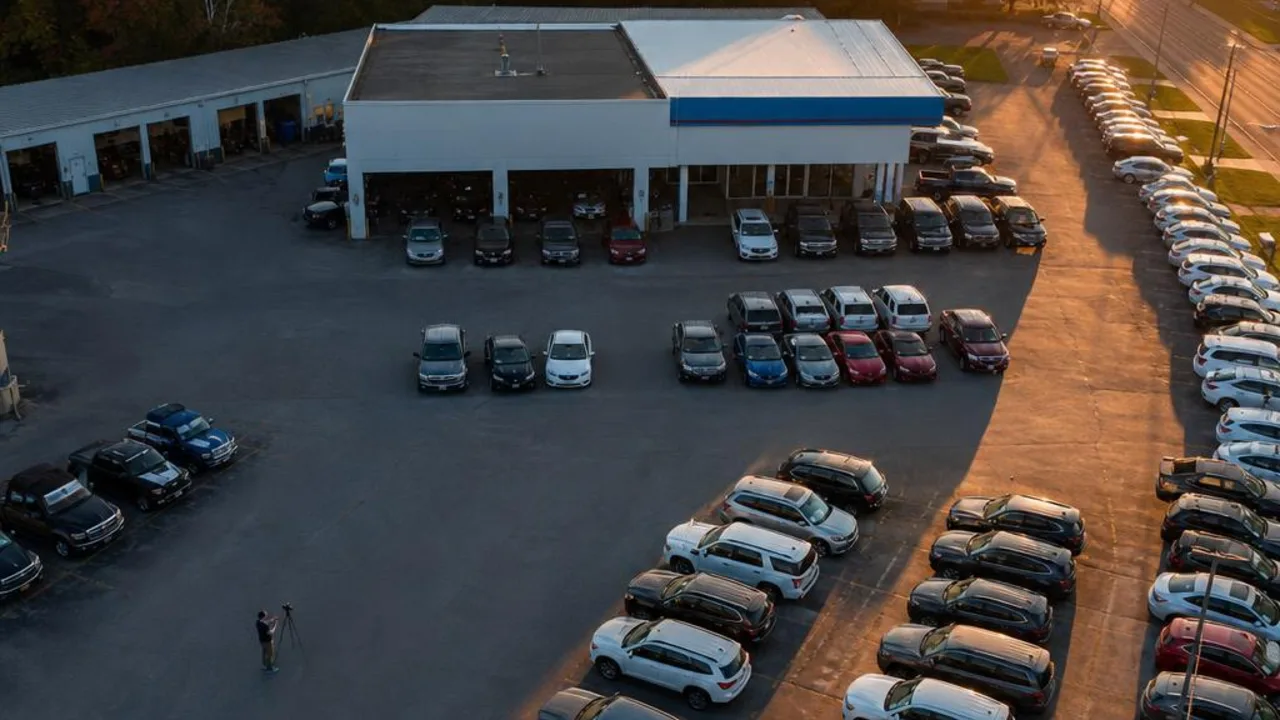
Many dealership drone shoots begin with a broad instruction to capture something cinematic. The result can look impressive in a launch video and then become difficult to use anywhere else. A reusable library starts with the opposite question: what will a marketer need to retrieve six months from now? That may be a clean five-second exterior establishing shot for a service campaign, a vertical pass of the used lot, a neutral transition between locations, or a facilities image with no visible customer information. If the shot is not planned, named, and cleared for that use, it is often effectively lost.
For a dealer group, the library must support individual rooftops without making every location look interchangeable. Build a capture brief around location-specific features, approved brand elements, departments, seasonal conditions, and intended formats. This is not a request for more footage. It is a request for footage with a job.
Write a Coverage Matrix for Each Rooftop
Create a matrix with rows for locations and columns for the kinds of work the footage must support: new-vehicle awareness, used inventory, fixed operations, recruiting, community events, group-level branding, and emergency replacement creative. Add required aspect ratios, duration ranges, and visual restrictions. The matrix reveals that a single high orbit over a building cannot answer every need. It also prevents the crew from spending the entire window capturing dramatic moves while missing simple, usable establishing frames.
- Capture wide, medium, and detail-oriented aerial perspectives for every priority department.
- Plan both horizontal and vertical-safe compositions; do not assume a horizontal master can be cropped cleanly later.
- Specify clean plates with limited signage as well as versions that visibly identify the rooftop.
- Identify routes, entrances, service drives, and landmarks that help a local viewer recognize the location.
- Mark visual elements that must not appear, including customer information, restricted areas, and unapproved signage.
Make the Production Window Operationally Safe
A dealership is an active workplace, not a closed film set. The production plan should include a location contact, a schedule that accounts for traffic patterns, a briefing for staff who may be in frame, and a process for pausing when operations require it. The pilot and production team must handle applicable aviation, airspace, insurance, and property requirements; marketing should not assume that a creative brief substitutes for operational approval. If a location cannot support a planned maneuver safely, revise the shot list rather than improvising around customers and moving vehicles.
Assign one person to coordinate with service, sales, security, and the general manager. That person can clear an area, remove temporary visual clutter when appropriate, and identify personnel who have opted into appearing on camera. A short preflight meeting often protects more usable footage than an extra hour of editing.
Capture Modular Sequences, Not Only Finished Moves
Editors need handles: a few stable seconds before and after an action, alternate paths, and shots that can be cut beside conventional footage. Ask for modular sequences such as a slow approach to the service drive, a static elevated view of a building, a lateral pass across a row of vehicles, and a departure that leaves empty space for copy. These pieces work in six-second paid placements, longer brand films, social cutdowns, and presentations. A complex single-take reveal may be beautiful, but it rarely replaces a library of flexible building blocks.
Avoid treating every vehicle on the lot as evergreen b-roll. Inventory changes quickly, prices and incentives are time-sensitive, and a visible unit can create an accidental promise. For evergreen material, favor facilities, traffic flow, customer-experience moments that are properly approved, and abstract movement. When filming inventory intentionally, label it as date-sensitive and link it to the current merchandising plan.
Catalog Footage While Context Is Fresh
The asset handoff is where expensive footage becomes a usable library or a forgotten drive folder. Require a folder structure and naming convention that includes rooftop, department, date, orientation, shot type, and any use restriction. Keep a searchable shot log with thumbnail references, a short description, rights notes, and the location contact. Store project files and original media according to the group's retention and access practices, not only in an editor's personal workspace.
- Use consistent names such as rooftop_department_orientation_shot-date_take rather than generic camera filenames.
- Record whether people, license plates, temporary pricing, or external brand marks require special treatment.
- Tag evergreen facility footage separately from inventory- or event-specific material.
- Save final exports with their source footage references so a future editor can find matching angles.
- Set access permissions for agencies and rooftops before distributing raw files.
Library Readiness Checklist
- Approve a rooftop coverage matrix and a location-specific shot list before scheduling the crew.
- Confirm operational contacts, safety responsibilities, appearance permissions, and restricted areas.
- Capture wide, medium, and vertical-safe footage with editing handles around each sequence.
- Separate evergreen facility footage from date-sensitive inventory and event assets.
- Deliver a searchable shot log, organized masters, derivative exports, and documented usage restrictions.
- Review the library after its first campaigns and add missing shots to the next production brief.
Want to implement these strategies?
Relevant Dealer can run this exact playbook for your operation.
Talk to an Operator